Posted by Ridwanars onSaturday, January 23, 2010,
under
motorcycle
|

Appropriate the development, Motorcross obvious has several kinds in use. The mentioned may be alternatively from fans and or motocross riders because motocross has special form but has use to all field.
In previous article that is The Different Types of Motocross Racing, Lydia Quinn give description about diverse type of motocross, that is : Freestyle, Supercross, Hill climb, Enduro, Supermoto, Trials motocross, Atv quad motocross and Sidecarcross. Furthermore, in article that discussed now are principal difference from types motocross. Especially from motorcycle form that used.
Several types of motocross has motorcycle's sameness likes in supercross and freestyle. Spesification and form doesn't has difference significant, author pays for type freestyle, obvious has short backfender. In both of this type often does tall jumps, so that need good 's shockbreaker frontage and backside.
...Riders will often shave down the seat foam to give a wider range of motion and better grip on the seat. Steering stabilizers are also common, and help keep the front tire running straight when tricks requiring the rider to let go of the handle bars are performed. Many riders will also shorten the width of the handle bars, to make it easier to put the legs around the bars, like such tricks as the 'heelclicker' or 'rodeo'. Excess cables, such as brakes and clutch cables are usually redirected away from the bars, to avoid riders getting their boots caught on the bike. ...
.... Riders may also choose to have 'lever' on their handlebars to help then when performing 'Kiss Of Death Backflips.' A 'lever' is usually a metal plate or pipe coming off the handle bars, and going in front of the riders wrist or lower arm to stop the rider from rotating during the flips, but letting the bike continue to move...
Wikipedia.org

Supercross & Freestyle
© Kawasaki KX450F Monster Energy
In enduro motorcycle difference lays in use headlamp because need at the (time) of bighttime trip, enduro often done trips few days likes trail adventure. Special manufacturer motocross even also take outside enduro type that usable for adventure fans. The magnitude of enduro motorcycle speed capacity not differ from motocross.

Enduro
© Suzuki RMX450
Difference tyre use will be seen in supermoto formed batlak, this matter is to accustoms race at asphalt track, but for flat track (this is other kind from motocross race) tyre use equal to reguler motocross, because the track is soil race. the tyre that worn fat enough, so that necessary setting towards swing arm. Several manufacturers even also many take outside motorcycle kind of this supermoto.
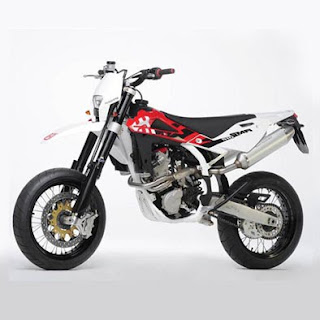
Supermoto
© Husqivarna SM510R
Other difference also appear in hill climb that use longer swing arms, that thing to give motorcycle balance towards the ledge stripe very steep. And tyre form very differ, tyre form doesn't has groove, but shaped lines jut and distant, this form of last for scratch soil with high-speed. The engine that used not standard motorcross engine, but has very big capacity with many valve to get high performance. Of course motorcycle frame get into big renovation to accustoms engine magnitude.

Hill Climb
In trial motocross, motorcycle that used very differ, motorcycle has light load, thin seat, inclined disappear, and tyre detail kind not too distant, this form of appear because trials motorcycle done with jump the hindrance, like stones, river, and steep ledge. Trials motorcyclist inclined stand in do the action.
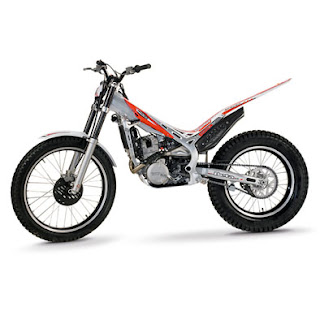
Trial Motocross
© Beta EVO 250/300 4T MY10
Glaring difference in sidecarcross, the motorcycle has aside place addition, so that have three wheels, this place addition is use for occupant that functioned to restrain motorcycle balance at the (time) of in action. Modification is done in frame and different frontage spring from standard spring.


Sidecarcross
© EML-mxproducts.nl

Author: Lydia Quinn
Motocross and dirt bike racing is as popular as ever, all over the world. Let's take a look at the many different types of motocross racing that are popular these days :
Freestyle
Freestyle motocross is sometimes also known as FMX. The main difference between freestyle and regular motocross is that riders try to gain points from judges based upon tricks that they perform. Tricks may include the 360, backflip, underflip, frontflip, carolla, scorpion, tsunami and sidewinder, among dozens of other tricks. There's also different types of landings and take-offs. One handed, no handed, side saddle, you name it. Famous freestyle motocross riders include Carey Hart and Mike Metzger.
Supermoto
This type of motocross racing began in the 1970's as a fun side project for motocross racers. Supermoto is a type of race where motocross bikes that are meant to ride on dirt are modified so that they can compete on pavement, as well as dirt. The track for a Supermoto race consists of both dirt and pavement. The bikes must have special tires with specific types of grooves that can handle both pavement and dirt tracks during the same race.
Enduro
Enduro is a type of off-road race with different challenges and obstacles included. There's often several stages and the bikers race against the clock in a timed trial as well.
Trials Motocross
This is a more straightforward type of time trial race. Motocross bikers race on a dirt track and they are timed. So instead of tricks or jumps, the focus of the race is purely to get the best time or to beat the best time.
Hillclimb
A hill climb motocross event is exactly as it sounds. Riders must go up a hill and try to get the fastest time. In some cases, the race may be to see who gets the farthest up the hill in a certain amount of time. Hill climb motocross is also called hillclimbing.
Supercross
Generally, supercross is a term used to describe an event, usually taking place in a large stadium, fairgrounds or arena that has installed an artificial and temporary dirt track. The track would consist of jumps as well as obstacles. The type of motorcycle used is a very high performance, specially outfitted bike made specifically to handle the high jumps and sharp turns that are typical of the event. Recently, there have been events that used temporary tracks that were modified to take place in smaller arenas such as basketball and hockey arenas.
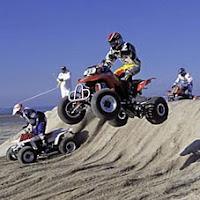
ATV Quad Motocross
This type of motocross is not for motorcycles but for ATV's or Quads, also called All Terrain Vehicles. The bike has four wheels and special frames and tires that are built for dirt racing.
Sidecarcross
This sport with a funny name is also called sidecar motocross. A sidecar is attached to the bike where a passenger will stand. The passengers job during the race is to provide a counterweight. The sport has declined in popularity in recent years, however.
Note from owner blog : Motocross development not get out of the history's process, above mentioned types are development from riders that wish for something that differ, because this motorcycle has superiority really differ from motorcycle usually.
About the author:
Lydia Quinn writes for PhatSportShades, offering motorcycle goggles, snowboarding goggles and sunglasses for everyday. Visit us at: http://www.phatsportshades.com.
© 2009, Motorcycle Hall of Fame Museum
In 1970, motorcycle that had two-stroke always rule over motocross racing. And Honda wished for the victory's crown. Difficulty was, company which had built USA reputation on four-stroke streetbikes, didn’t have anything to compete against the light and powerful oilburners (motorcycle's two-stroke engine) as competitors. Finally, Honda built a two-stroke motorcycle, decided connection with tradition while14 years from USA Four-stroke engine, to produced legend in this time that was Elsinore motocross bike. And taked aim correctly at the centre of the AMA National Motocross Championship was the trickest one of them all, this works RC250 racer, now on display in The Motorcycle Hall of Fame Museum at AMA headquarters in Pickerington, Ohio.
Besides the state-of-the-art, 249cc two-stroke, motorcycle that delivered the explosive power that motocross demanded, Motorcycle that was loaded with a few unobtainium parts, including magnesium hubs, electronic ignition and reed valve induction. Only less the rider, Honda hired to defend AMA 250cc Champion that is Gary Jone and go away from yamaha with rule over track's stripe. Pass third race's season, at the strait of Florida, Jones had won on the new machine. He devolves trip aims victory at many five races, belong three earlier seasons, gather every Honda's first rank at MX Championship. Sure, riding such a new engine like that have many challenges.
One other principal from all that several trick from race's factory. When the ’73 motocross season began, Jones’ works bike was full of them. But as the season wore on, many from motorcycle's parts couldn’t handle the strain. Then Jone, cooperated with his father and Don, the expert motorcycle tuner, more operated and more production's parts into the works bike to make it more reliable. But the result was clear: Honda won the championship. And that did majority image brace of the Elsinore as an original breed, helping to sell untold version's of motorcycle production to amateur racers and raise the brand’s motocross racing reputation.
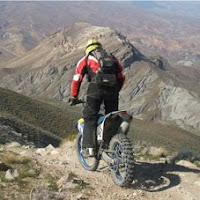
Moment do trail adventures wears offroad motorcycle, best bring to drink enough on the way. Drink usually present and ally in rider's bag usually called camel bag. In this article will not discuss the camel bag problem, exactly will discuss to hit effect [of] less drink that called dehydration with the marking. Dehydration is liquid's deficit that caused by liquid's under entering or liquid's expenditure overs do. Usually happen in person with heavy activities during long but liquid that is drunk a little or can also in one who diarrhea. Prevent dehydration one of the survival for trail adventure or offroad motorcyclist.
Dehydration is loss of water and important blood salts like potassium (K+) and sodium (Na+). Vital organs like the kidneys, brain, and heart can’t function without a certain minimum of water and salt. In underdeveloped countries, dehydration from diseases like cholera and dysentery kills millions every year (usually infants and children).
When heavy activity like on the way at open-air, secretory sweat more many so that must be replaced with drink. When less so happen dehydration. Dehydration can also evoke conditon other dangerous like muscle's cramps, heat stroke or shock.In one who light dehydration or medium, better given to drink as much as possible. Better when given electrolyte's liquid like oralit or sugar-salt solution (water 200 ml + sugar-salt + salt in one-end of tea spoon). For the things unconscious, better as soon as it brought to well-being's service closest. So, before happen dehydration better prevented with many drink, minimal two litres during do heavy activity.
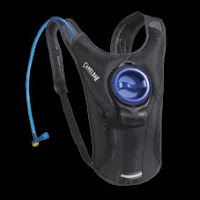 © CamelBak
Camel Bag for Offroad Motorcyclist
© CamelBak
Camel Bag for Offroad Motorcyclist
 © CamelBak
Hydro pocket for camel bag usually worn to 2 water's litres
© CamelBak
Hydro pocket for camel bag usually worn to 2 water's litres
Clinical Findings of Dehydration :
Clinic Indication
| Mild
| Moderate
| Severe
|
|---|
Level of Consciousness
| alert
| lethargic
| obtunded
|
Capillary refill*
| 2 s
| 2-4 s
| >4, cool limbs
|
Mucous membranes
| normal
| dry
| parched, cracked
|
Tears
| normal
| decreased
| absent
|
Heart rate
| slightly increased
| Increased
| very increased
|
Respiratory rate/pattern*
| normal
| Increased
| increased and hyperpnea
|
Blood pressure
| normal
| normal, but orthostasis
| decreased
|
Pulse
| normal
| thready
| faint or impalpable
|
Skin turgor*
| normal
| slow
| tenting
|
Fontanel
| normal
| depressed
| sunken
|
Eyes
| normal
| sunken
| very sunken
|
Urine output
| decreased
| oliguria
| oliguria/anuria
|
*best indicators of hydration status.
© emedicine.medscape
Below are some warning signs for dehydration :
MILD
| MODERATE
| SEVERE
|
|---|
Thirst
| Very dry mouth membranes
| All signs of moderate ehydration
|
Dry lips
| Sunken eyes
| Rapid, weak pulse (more than 100 at rest)
|
Slightly dry mouth membranes
| Sunken fontanelle (soft spot) on infant’s head
| Cold hands and feet
|
.
| Skin doesn’t bounce back quickly when lightly pinched and released
| Rapid breathing
|
.
| .
| Blue lips
|
.
| .
| Confusion, lethargy, difficult to arouse
|
© quickcare.org
Severe Dehydration, you must get to a hospital right away. Intravenous fluids (IVs) will quickly reverse dehydration, and are often life-saving in young children and infants.
Moderate Dehydration, careful home treatment can be safe, but phone contact with a physician is advisable. Children under 10 with moderate dehydration should see a physician first, though hospitalization usually isn’t necessary.
Mild Dehydration, is safe to self-treat at all ages, as long as it doesn’t worsen.
To treat dehydration, you must first address the cause: Fever, Vomiting, Diarrhea, and Heat Exhaustion are the most common reasons for dehydration. When offroad motorcyclist experience dehydration because caused by activity very heavy in go through trip, and dehydration that undergone belong to light dehydration or mild dehydration. So, such as those which mentioned above, before happen dehydration better prevented with drink many, minimal 2 litres during do motorcycle's activity offroad.
© 2008 Acerbis USA.
Plastic's artist that the product now worn throughout the world.
Acerbis has been manufacturing diverse collections of motocross or trail adventure with offroad motorcycle accessories for several decades now. The company is well known for its stunning styles, thoughtful utility features and durable products.
 © Acerbis Itali
Acerbis product of trail adventure motorcycle accessoriesIn 1973, Franco Acerbis work as a mechanical for the Italian Enduro Team where this matter make him can go to USA. During that journey, he comes a movie star that time begins top that is Steve Mc Queen with a plastic's area's pioneer that is Preston Petty. During the trip that's business's creative brainchild a post free acerbis appears. By use of loan's money from friends and family and without English language skills, Franco hopped on another USA bound plane to sell Preston his proposal for importing Petty fenders into Italy.
 © 2008 Acerbis USA.
Franco Acerbis
Circa : 1971After three days, Franco gets a contract to 12 months and he ready for has worked. In his first year, he imported 100 plastic fenders for distribution in Italy and southern Europe. By the third year he success has sold 40,000 mudguard's unit.
After Preston stop the plastic fenders production, he found himself that he have come to market's leader with no product to deliver in 1979, this is when Acerbis began to produce their own products, an entrepreneur grew to lead a small factory and production expanded to include rotation and vacuum molding .During the next decade Acerbis became a world leader in fuel tank production, revolutionizing the manufacturing process through the utilization of painted nylon PA6.
These days, Acerbis stand pride that consist of to big company at centre of Itali with a branch at USA in location at San Diego, California. Distribution network supplies 43 countries around the globe with over 1,800 different Acerbis products. The company’s list of esteemed OEM clients includes Aprilia, BMW, Cagiva, Ducati, Honda, KTM Triumph and Yamaha and contributes to an annual production of more than 4,000,000 different parts in plastic. See also at Acerbis
![]()
Every trail adventure, offroad motorcycle, or dirt bike rider must has responsibility in riding they motorcycle. Good towards ownself and or environment as they passed. Nature gives tool not limited and very have variation. Heavy 's nature's condition of course gives challenge for us to explore it, but did not mean that we cross with term subjugates nature's condition, willing to subjugate nature should we conquer first of all, so that we cross without botch and change nature's condition that there are.
Offroad Motorcycle or dirt bike riding is another growing form of outdoor recreation. Enthusiasts enjoy the opportunity to get deeper into the backcountry to enjoy nature, hone their technical driving skills, and experience the comradery of the shared experience with other enthusiasts.
Each of us has a different reason for pursuing outdoor recreation but we all share the responsibility for protecting natural resources, respecting other recreational trail users, and maintaining access to our favorite recreational opportunities. The best tool to achieve these responsibilities is to maintain a positive outdoor ethic which minimizes impacts on our lands, waters, and other recreationists.
Throughout the Tread Lightly! This system will help us prepare to responsibly enjoy our off-highway outdoors experiences, and to be a positive influence on nature and those around us. Now, off to the wonderful world of responsible dirt bike riding, the Tread Lightly! way. Hereunder all that related to tread lightly fundamentals and principles :
1. Travel Responsibly on roads and trails or in permitted areas.
- Travel only in areas that are open to your type of recreation.
- Stay on routes and trails designated for your type of travel.
- Don't create new routes or expand existing trails.
- Cross streams only at fords where the road or trail intersects the stream.
- Understand and practice proper techniques related to negotiating terrain.
- Always travel with a partner. Traveling solo can leave you vulnerable if you have an accident or breakdown.
These are the fundamentals of reducing impacts on the land. Dirt bike riding requires specialized techniques for negotiating terrain. By learning and applying these techniques, your impact on natural resources will be greatly reduced.
2. Respect The Rights Of Others including private property owners and all recreational trail users, campers and others to allow them to enjoy their recreational activities undisturbed.
- Respect and be considerate of other users so that all may enjoy a quality outdoor experience. Keep a cheerful, leasant attitude. A gracious “Hello”goes a long way to building a friendly relationship with other trail users.
- Yield the right of way to those passing you or traveling uphill and always yield to horses. When driving also yield to hikers, and bikers. Leave gates as you find them unless otherwise posted.
- If crossing private property, be sure to ask permission from the landowner(s).
- Keep the noise and dust down.
- Don't be a trail hog. Share with all those who recreate, regardless of their means of travel.
Respect and common courtesy go a long way. By valuing the environment and those who enjoy it, you keep recreational opportunities available for you and others to enjoy. Remember these basic rules and you will find your outdoor experience to be more rewarding.
3. Educate Yourself by obtaining travel maps and regulations from public agencies, planning for your trip, taking recreation skills classes, and knowing how to use and operate your equipment safely.
- Know local laws and regulations.
- Know which areas and routes are open to your type of recreation.
- Make your trip safe. Have the right information, maps, and equipment and know how to use them.
- Make sure the vehicle is compatible with road or trail conditions.
- Make sure your vehicle is mechanically up to task. Be prepared with tools, supplies, spares and a spill kit for trailside repairs.
With a little preparation and education, you can make your next backcountry experience fun and safe while protecting the environment. Always plan for the expected as well as the unexpected.
If the opportunity presents itself, take a course or workshop related to your favorite outdoor activity. Universities, community education programs, and outdoor retailers and outfitters often offer classes related to recreational activities. Education and preparation will make your trip easier and more enjoyable.
4. Avoid Sensitive Areas such as meadows, lakeshores, wetlands and streams, unless on designated routes. This protects wildlife habitat and sensitive soils from damage.
- Other sensitive habitats to avoid unless on designated routes include cryptobiotic soils of the desert, tundra, and seasonal nesting or breeding areas.
- Avoid disturbing historical, archeological, and paleontological sites.
- Avoid “spooking”livestock and wildlife you encounter and keep your distance.
- Motorized and mechanized vehicles are not allowed in areas designated Wilderness.
With the number of recreationists rapidly growing every year, the repeated and often unintentional misuse of land creates environmental damage especially in sensitive areas. By using common sense and taking a few precautions, recreationists will ensure that the natural places they frequent will remain available and in good condition for future use.
5. Do Your Part by leaving the area better than you found it, properly disposing of waste, minimizing the use of fire, avoiding the spread of invasive species, restoring degraded areas, and joining a local enthusiast organization.
- Leave it better than you found it. Carry a garbage bag and pick up litter left by others.
- If you encounter repairable damage on the road or trail, don't pass it by. Stop and pick up litter and repair damage as best you can.
- Properly dispose of garbage, sanitary waste, and gray water.
- Follow practices to avoid spreading invasive species.
- Protect the soundscape by preventing unnecessary noise.
- Join a local enthusiast group. They provide great opportunities to learn more about your sport and local recreation areas and volunteer events, and can become wonderful community to share your experiences with.
Taking a little extra time and effort to minimize your impacts and mitigate the impacts of those who came before you will keep your favorite recreation spot open and beautiful today and in the future. See also at Tread Lightly!
Posted by Ridwanars onMonday, November 30, 2009,
under
organization
|
© Tread Lightly!.
Really undeniable that offroad motorcycle or trail adventure activity in this time chargeable as one of the nature's vandal, although not thoroughly true, but time has come we have changed! Offroad motorcycle even also there the ethics, even less we face direct with nature and environment around fitting we guard with the preservation, so born term Tread Lightly. Besides Trail Riders Fellowship that do this matter's activity, one of the organization that be conceptor and develop this program by the name of same that is Tread Lightly!
Tread Lightly! is a national nonprofit organization with a mission to proactively protect recreation access and opportunities in the outdoors through education and stewardship. TreadLightly!'s educational message, along with its training and restoration initiatives are strategically designed to instill an ethic of responsibility in a wide variety of outdoor enthusiasts and the industries that serve them. The program's goal is to balance the needs of the people who enjoy outdoor recreation with our need to maintain a healthy environment.
In 1985, the U.S. Forest Service launched the Tread Lightly! program as a means of addressing concerns about the impacts from increasing numbers of visitors to the great outdoors for recreational purposes. In 1990, to maximize the program?s effectiveness, management responsibilities were transferred to the private sector, making Tread Lightly! an apolitical, nonprofit organization. Tread Lightly! is now the nation's signature ethics message for recreationists that use motorized and mechanized vehicles in their outdoor pursuits.
Tread Lightly! has become an ethical and educational force in bringing together and unifying a broad spectrum of stakeholders including agencies, industry, media, conservation and enthusiast groups, and concerned individuals who share a common goal—to find a balance between humans and nature. Our federal partners in spreading the message of responsible and ethical use of the outdoors include the National Park Service, Forest Service, Bureau of Land Management, Bureau of Reclamation, and the Army Corps of Engineers.
The message is simple: conserve our environment! Make the commitment to follow Tread Lightly! principles as summarized in the Tread Lightly! Pledge:
- Travel Responsible
- Respect the Rights of Others
- Educate Yourself
- Avoid Sensitive Areas
- Do Your Part
These are the basic tools for responsible recreation.
In the following pages you will find indepth information on how to Tread Lightly! by minimizing your impacts on land with your dirt bike. By practicing these principles and suggestions provided in the guide, you will help protect natural resources and preserve access to public lands.
This organization is even also gives place and study for clubs to express their concern for the deterioration of recreational opportunities. Clubs and Associations play a critical role in disseminating Tread Lightly!’s message, principles and educational materials to peers and others while at the same time building enthusiasm for the program. Tread Lightly! offers two types of club memberships: Member Clubs and Official Partner Clubs. See also at Tread Lightly!
![]()
Glad people who ventures on, either in mount, at forest or at other place, must always aware risk exist in activity. Erudition and comprehension risk may be will be got to be a factor esensial in preparation and activity's execution at open-air. Risk everything may be appear, related to dangers that implied in activity execution.
In general, danger source can come from ourselves self (subjective danger) and come from environment (objective danger). Subjective danger for example carelessness, perfunctorily preparation, minimum erudition and others. Because in character such, so subjective danger this under mastery or admit of us control. Objective danger be danger that threaten from outside our self, arising out from environment, earthquake for example, flood, beast, and another.
Danger above be relative explanation in character. There that be danger for certain person but on the contrary be fun matter for another person. To be certain, for nature lover that dominate well techniques base alive at free nature are fun matter. Not such for common ones, may be activities at free nature be assumed can ill strarred. But, however ready it we are in face of various risk, a time may be we are forced face undesirable critical situation.
Situation like that be matter is not guessed. Lost food provisions temporary few days more has attenuated or sink and we are awash at ocean midst. Critical/marginal conditions like that can we classify as condition survival. Survival come from word survive, simply can be interpretted as efforts to defend alive.
Survival Skills
Survival skills or ability survive alive ability that can be used to help somebody for permanent can survive in dangerous situation that (like to quake earth) or dangerous location (likes desert, mount and or forest). This ability belongs manner makes fire, find or make protection, make water safe to drunk, find and identify food, cure wound or dispute with use device. Every different environment type will give challenge and different danger
The important defend alive (survival) related to critical condition appearance. Can be questioned here: What causes that critical condition appear? or equally "aspect" what shall we face in situation survival? In matters in reality that we shall face to base on condition spesification, lost for example at sand desert or at pole will show different aspects. But the other side, detectable certain samenesses existence in aspect that will appear in every condition.
In general, those aspects detachable in 3 groups:
- Psikologis: panic, afraid, worried. Solitude/self, confused, depress. Boredom and others.
- Physiological: ill, hungry, thirsty, wound, tired, and another.
- Environment: hot, cold. dry, rain, wind. Vegetasi, fauna, and others. survival.
Priority In Survival
In a condition to survive alive, there 5 (five) priorities that must be determined first time that is:
- Which are positive mental attitude.
- Find or make protection that can to give to somebody for permanent can protected and permanent felt warm and dry.
- Human can linger during 3 (three) day without water. This matter relates to nature's condition with physically.
- Fire, help to give warmth, neutralize and make proper water at drinks, Intinidate wild animal, avoid mosquito and another insect and give sign to another human.
- Human can survive alive without eat during one week, but hunger will make person becoming not clear in will think, weak and easy assaulted disease.
Priority on not has absolute, mean removable or change depend on environment. But one definitive matter protection that is wanted in environment whatevers.
From several cases survival. There are some sameness that can influence success in overcome condition survival. Of course apart from God accomodation or good destiny. There three things that can be used to overcome survival. That is:
1. Spirit to defend alive
Oftentimes even there civilian to open-air faces danger in mortally the condition, but because strong the willing or linger, impressing he gets superlative strength to overcomes conditon. So. strong confidence to defends this alive is important authorized capital and dapa influence other authorized capital.
2. Self immediacy
Mean here one who has erudition and know-how that can anticipate dangers survival, land navigation for example, first aid, cordage, practise biology, science survival, field science and appraising, and others.
3. Supporter tool
Total and device kind that has also can influence success in survival. Survival without device anything with survival that has device of course differ. In case survival so use value a knife or axe far valuableer will be compared with credit card or polished diamond gold. So, device yes has at the (time) of survival will influence success and manner survival.
Basically to overcome weather with give protection in body, either from in also from outside. Protection forms that can be carried on:
A. Bivouac
Aim makes bivouac as pleasant shelter to protects our self from nature factors and extreme environment, that is: hot, cold, wet. Wind, beast and as it. As to condition that must be payed in make bivouac :
- field condition (ridge, valley, wet. dry, opened, closed).
- nature facilities that subsidize around we (are tree, foliage, cave, hole) and Ingredient whom we bring (poncho, raincoat, plastic and as it).
Must be rememberred in make bivouac:
- bivouac don't until leak.
- choose good location.
![]()
![]()
Don't too botch nature at vinicity.
B. Clothes
To hold back so that hot our body don't too much out, best we protect body with waterproof clothes and hold back cold.
C. Food
One of [the] supporting for body protection that come from within food. Wanted for calorie increase, give energy in muscle. and replaced cells or networks that broken. Food source can we obtain from plant and animal at area of around us.
D. Fire
Besides can warm up body. More important can increase psychological spirit. Somebody in a condition survival first time will choose to make fire before do other matters. Another fire function:
- illumination
- cook food/drink
- make marking or code
Three fire maker elements
The Inharmony between the third will evoke smoke. Otherwise has flammable ingredient, must we lay a fire around us, that is:
- dry wood little cuts
- firing powder
Hot that causes incidence fire obtainable from match. Authority lens. Firing stone, and another.
E. Water
Very need to every life aspect and be priority in survival. If we are water deficit can cause dehydration (liquid deficit body's). This dehydration happens caused by evaporation process from body. Dehydration conditon that over do can also evoke death. From statistical is got; when does somebody not get water at all during 3 days so he threatened death. Manner overcome it us must drink enough (around 2 litre/day)s. When then water supply finished, so we must can to look for it.
Water classification in survival can we for on :
1. Water that drinkable direct. The condition not coloured and odourless. The example water from spring, river, lake, rain. Otherwise got water source. Can be looked for from plant that aqueous and bontoxic. Plant kind that aqueous:
- Wild mangosteen plant, rattan for example.
- Spread plant, mould for example.
- Special plant, Semar poke for example.
2. Also show spring location because in morning and animals evening certain will want to drink.
3. Polluted water and want complex process so that can be drunk, the example are sulphur water, swamp waterwith water tall acidity level, water from factory waste and as it.
4. Polluted water but with simple process drinkable like: water that stagnate, muddy water, great river water and another.
Matter necessary payed if water is a problem critical. Don't consume anything. Because water not only worn to launch food passes intestines, but also soften and liquefy food. Chemical process between food and Intestines self want water.
Technique gets water
![]()
![]()
Based on evaporation
From plant
![]()
![]()
Water screening
![]()
![]()
![]()
.© 2009, Motorcycle Hall of Fame Museum.
When Swedish MX star Lars Larsson lined up on this bike for the 1971 Indian Dunes motocross race in Southern California, his competition thought he was on a regular Husqvarna. He was instrumental in establishing Husqvarna in the U.S. and later went on to start Torsten Hallman Original Racewear, now known as Thor. But Larsson knew better. He was aboard one of the rarest machines in the history of American motocross: a 400cc Husqvarna with a frame made of titanium. And he used it to win both motos and dominate the Inter-AMA series support class that year.
He told them: Hallman Racing had commissioned Pro-Fab to make a small run of light, strong and expensive titanium frames to accept Husky engines. Other weight-saving tweaks included titanium fork crowns, handlebars and axles. The fenders and seat base were thin plastic, the gas tank was aluminum, and various parts—including the brake pedal and ignition cover—were drilled to lighten them further. The result weighed in at an amazing 189 pounds, or 25 pounds lighter than a comparable production Husqvarna. The machine helped Larsson win four of six rounds of the Inter-AMA motocross series.
Though legal when it was made, the frame was disallowed for the 1972 season by AMA officials, who feared titanium would escalate racing costs. As it turned out, Larsson didn’t need a trick bike to win. He went on to earn a gold medal at the 1971 International Six Days Trials, riding for the U.S. in Czechoslovakia, and he remained a top enduro rider through the ’70s. He was inducted into the Motorcycle Hall of Fame in 2002.
His titanium Husky, refitted with a 250cc engine after the original 400cc motor was destroyed in a car crash, is on display as part of the Museum’s “Motocross America” exhibit. See also at Motorcycle Hall of Fame Museum




![BnTs [BenTes] Productions](http://i1252.photobucket.com/albums/hh568/Ruang27/Banner468x60.gif)





